

Inside the Studio of Carly Gertler
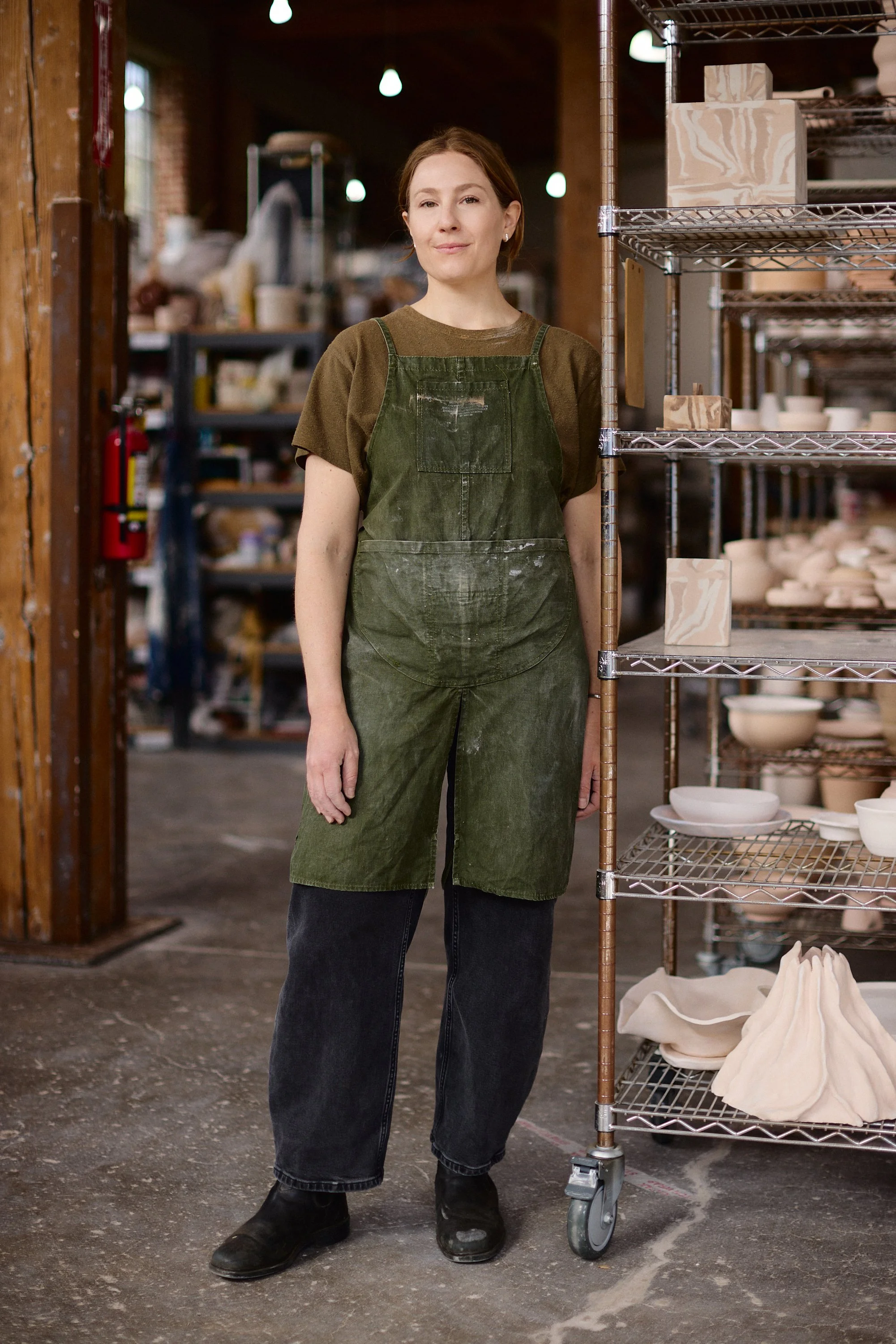
We recently spent the morning with ceramic artist Carly Gertler at her shared studio space in San Francisco. Surrounded by glaze tests, layered clay forms, and shelves of ongoing experiments, she walked us through her process of making a piece using the nerikomi technique of layering, compressing, and slicing clay to reveal patterns.
What struck us most was her openness to discovery. Setting it all up and then allowing the material to reveal its own direction through the process.
Photography by Danica Taylor
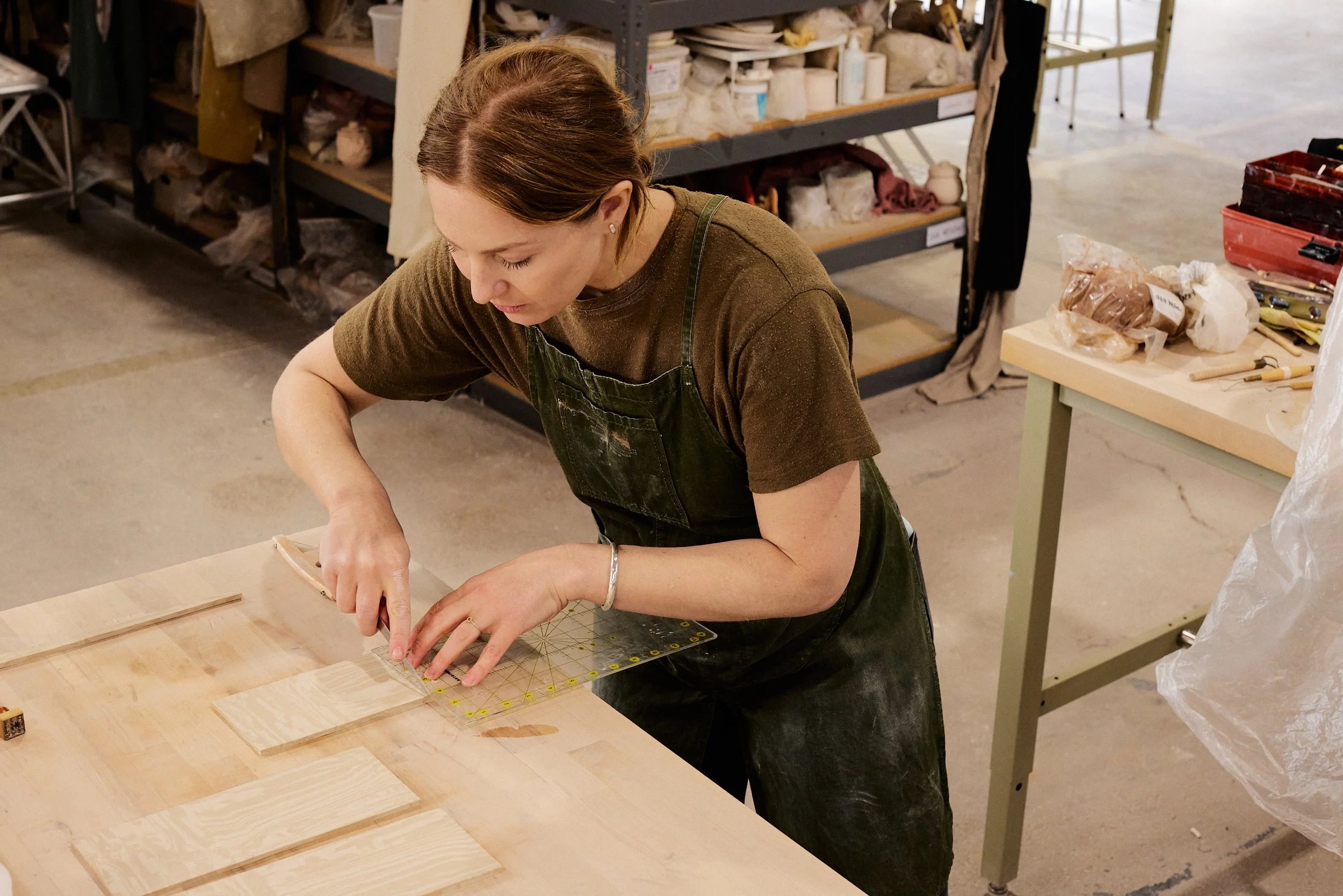
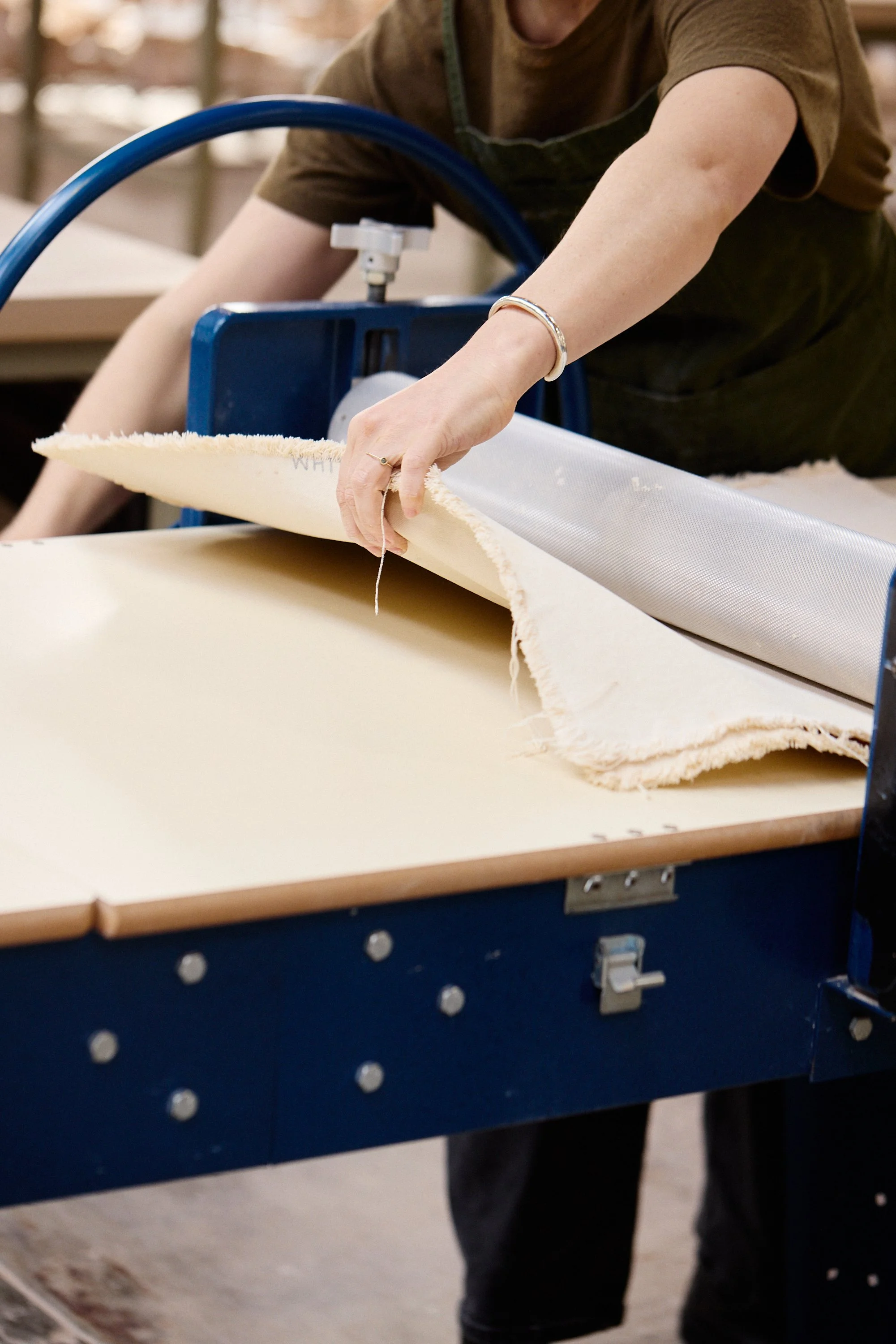
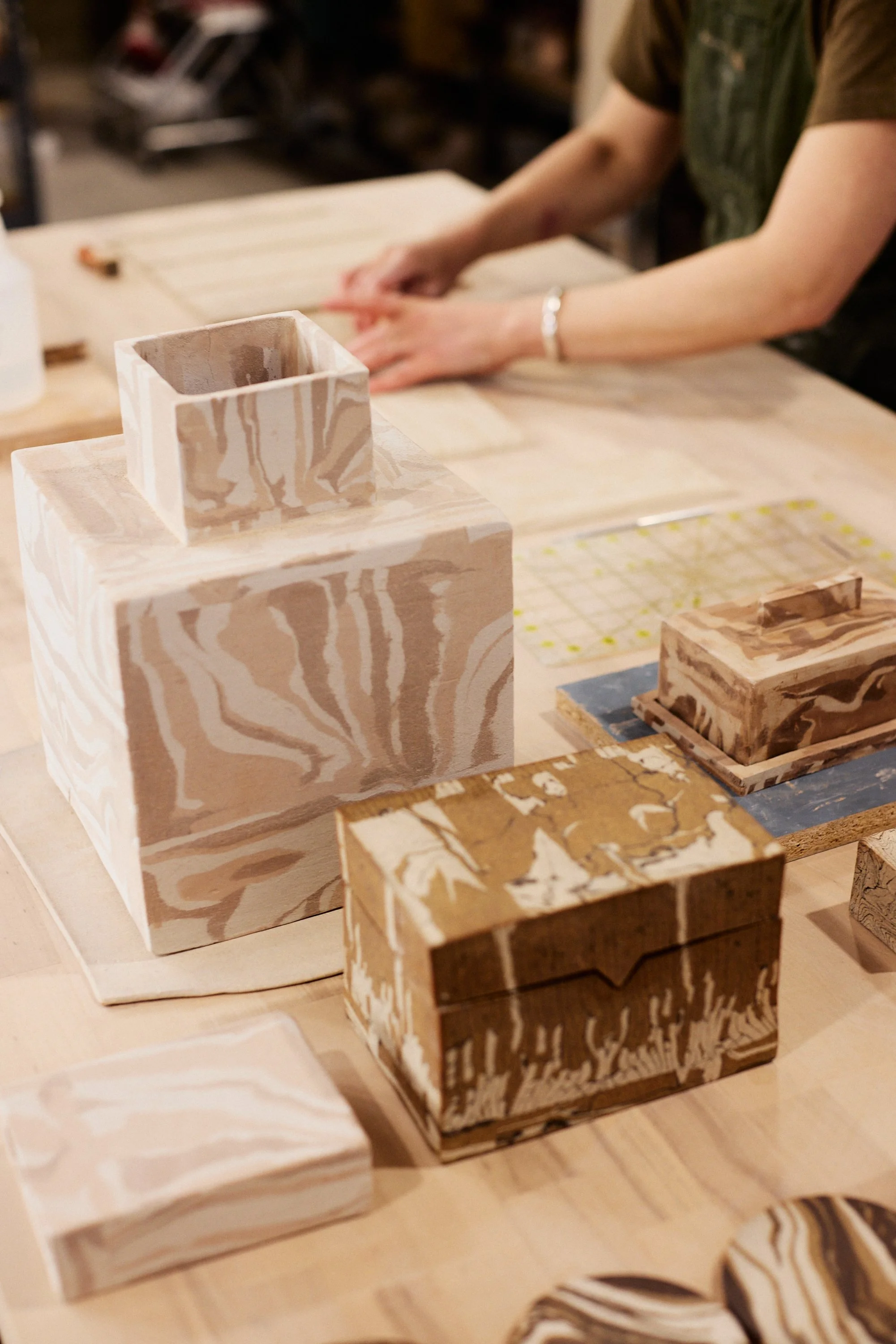
Describe what you make:I make stoneware and porcelain vessels using nerikomi, a hand-building technique whose name comes from the Japanese neri (kneading or mixing) and komi (into). Contrasting clay bodies are layered, folded, stacked, and compressed into solid blocks; slices cut from those blocks produce patterned slabs — patterns that are intrinsic to the material rather than applied to its surface. I cut and assemble these slabs into vessels, typically rectangular in form. Keeping the form consistent and quiet allows the material and pattern to take prominence.
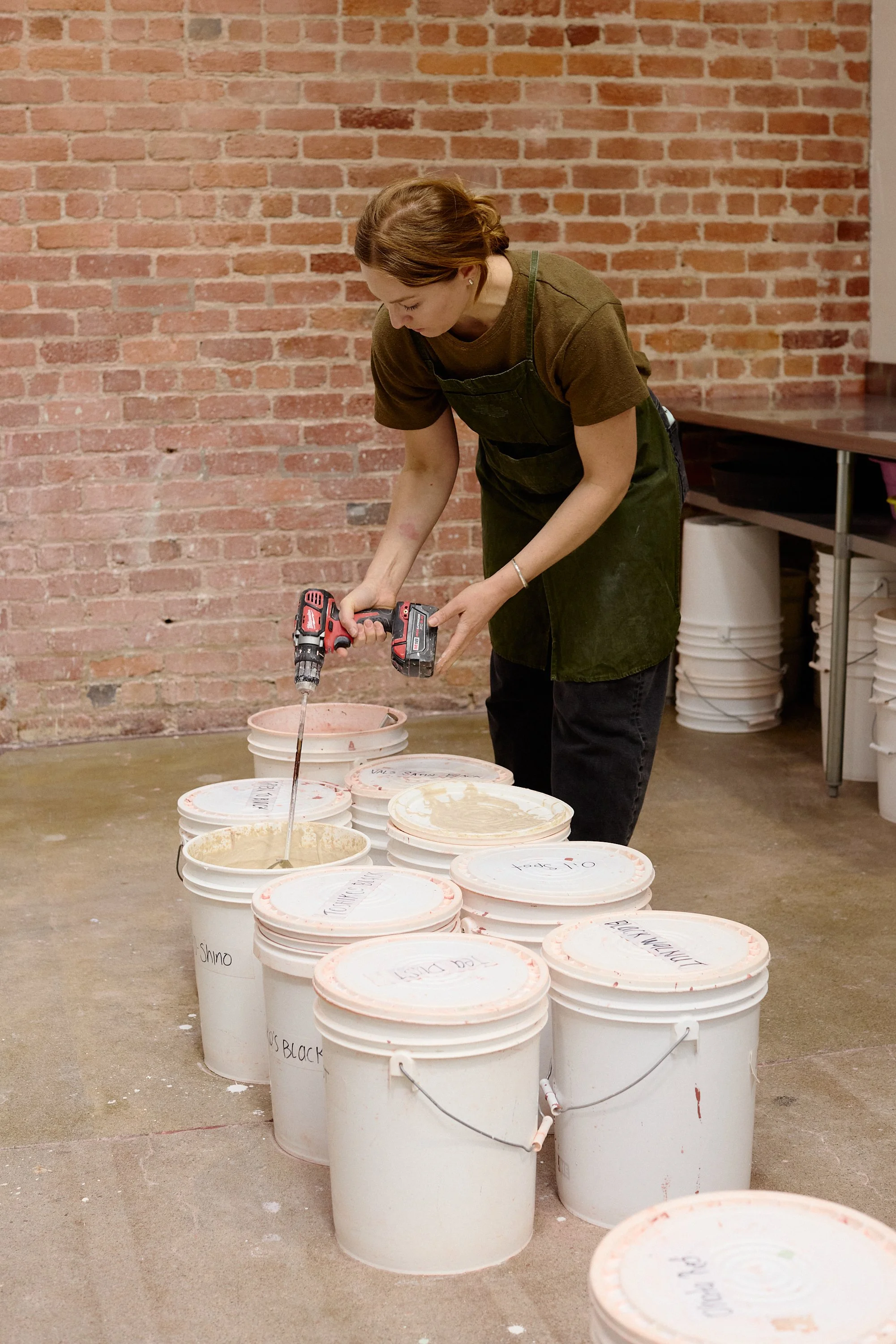
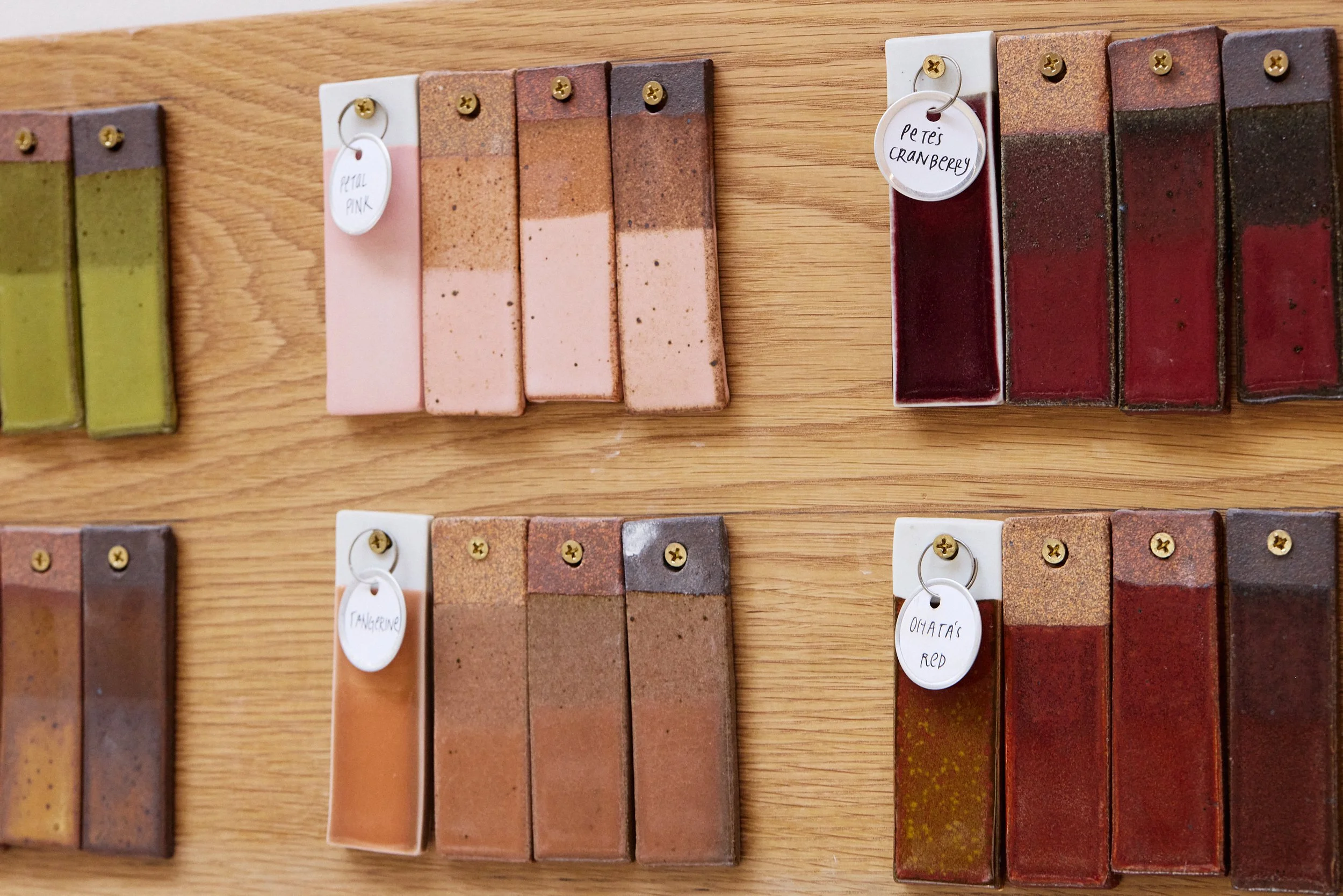
After bisque firing, the work is fired in a high-fire gas reduction kiln, where placement and adjacencies introduce rosing and unpredictable surface effects. Most exteriors are left unglazed; while some experiment with Shino glazes, prized for their volatility and their ability to trap carbon during firing, producing surfaces that range from metallic sheens to red undertones and soft greens.
Though this process of mixing clays is most associated with 20th-century Japanese ceramicists who gave the technique its name, its lineage reaches back much further to the Tang Dynasty in China. I've come to it as a self-taught, contemporary practitioner, working in dialogue with that long history and alongside those who are reinventing the infinite ways this process can unfold.
“There’s something beautiful about allowing material to behave like itself.”
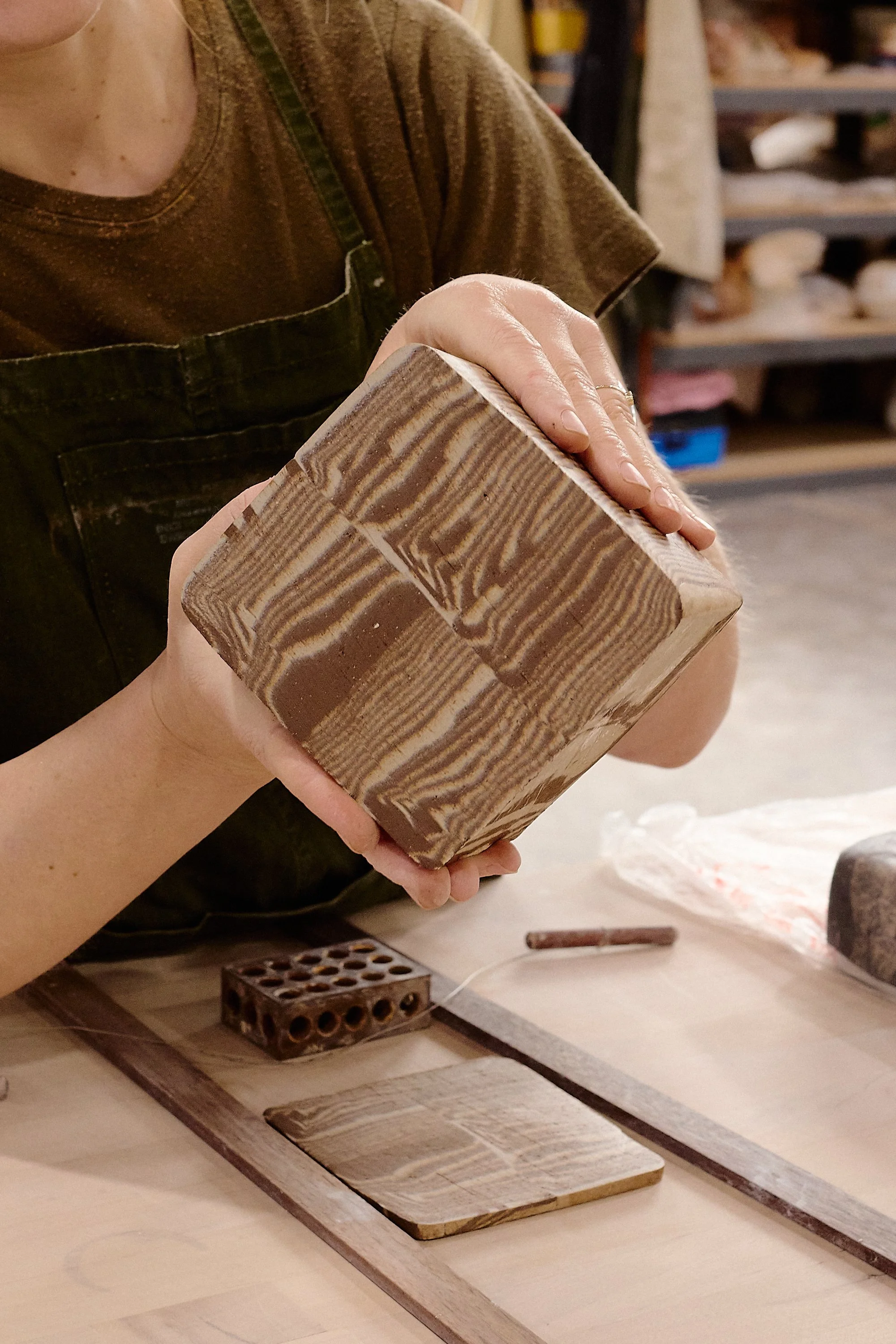
What draws you to this material or process?The process of Nerikomi turns clay into a three-dimensional, solid material, conceptually similar to stone or wood, which can be sliced or carved to reveal its inner patterns in an infinite variety of ways. This three-dimensional thinking, designing the x-y-z axes of the block, and choosing how to slice it open and reveal its inner patterning, continues to fascinate me. I’m also drawn to the ability to approach this process with a truly blank slate mind, allowing intuition to guide the creation of each patterned block. Lastly, I’ve always been drawn to the vessel as a form, its capacity to hold space and toe the line between utility and sculpture.
What does your work explore or return to again and again?The beauty of looseness in method — working through intuition, surprise, and chance rather than precisely planning a pattern — and the legibility of the maker's hand in the resulting pattern and its interplay with the final form.
Where do you find your references or starting points?Counter to my architectural practice, my ceramics work proceeds largely without a direction or contextual references. I usually begin with a vague idea of the kind of pattern I'd like to create — something more geologic, something fine-grained, something more linear and geometric — and from there the process is quite free. With my woven tapestry work, I set out to create some idea of a solid woven ceramic piece inspired by references from Anni Albers, Sheila Hicks, and Cody Hoyt, but eventually ended up somewhere quite different, following what the nerikomi block itself seemed it wanted to become.
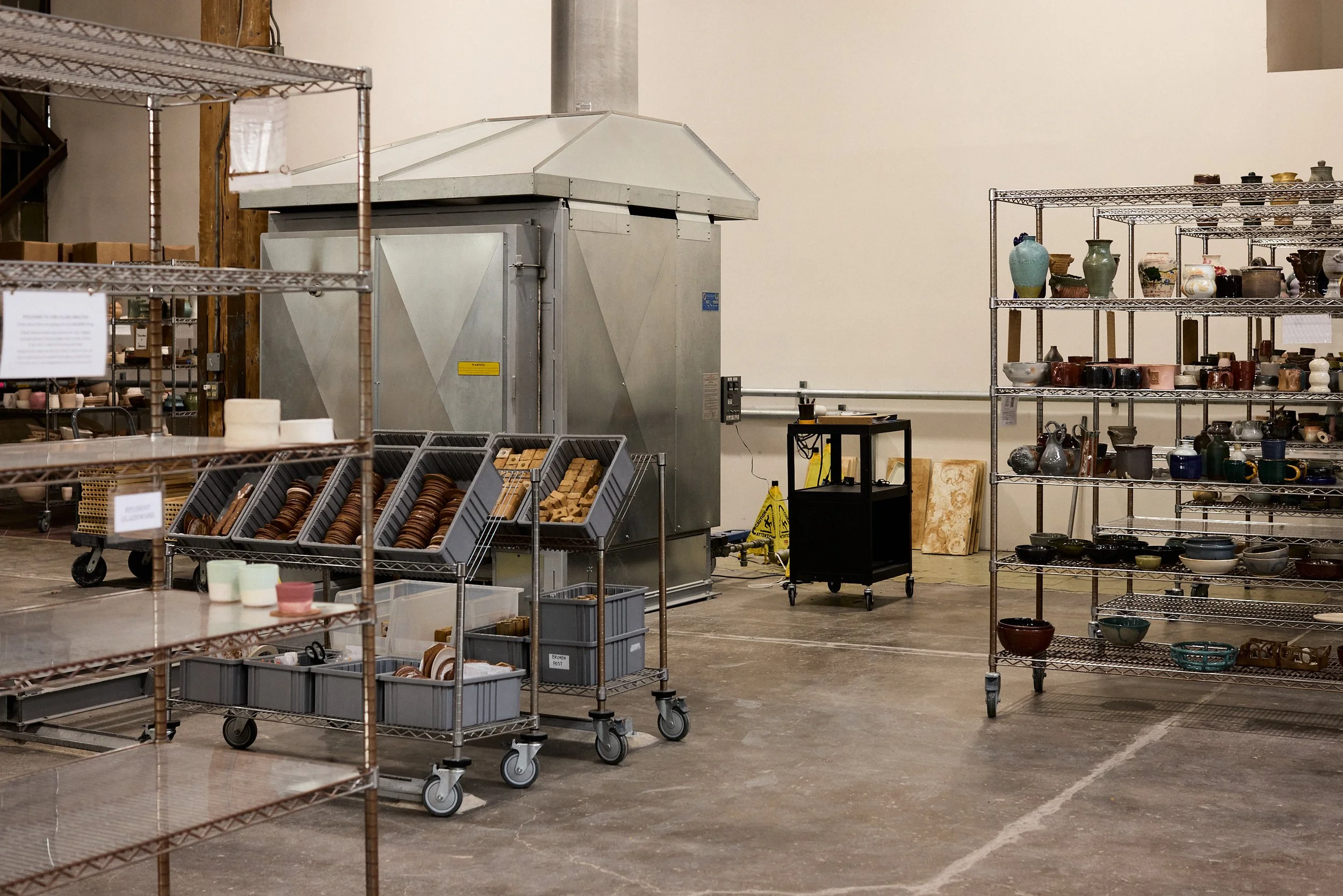
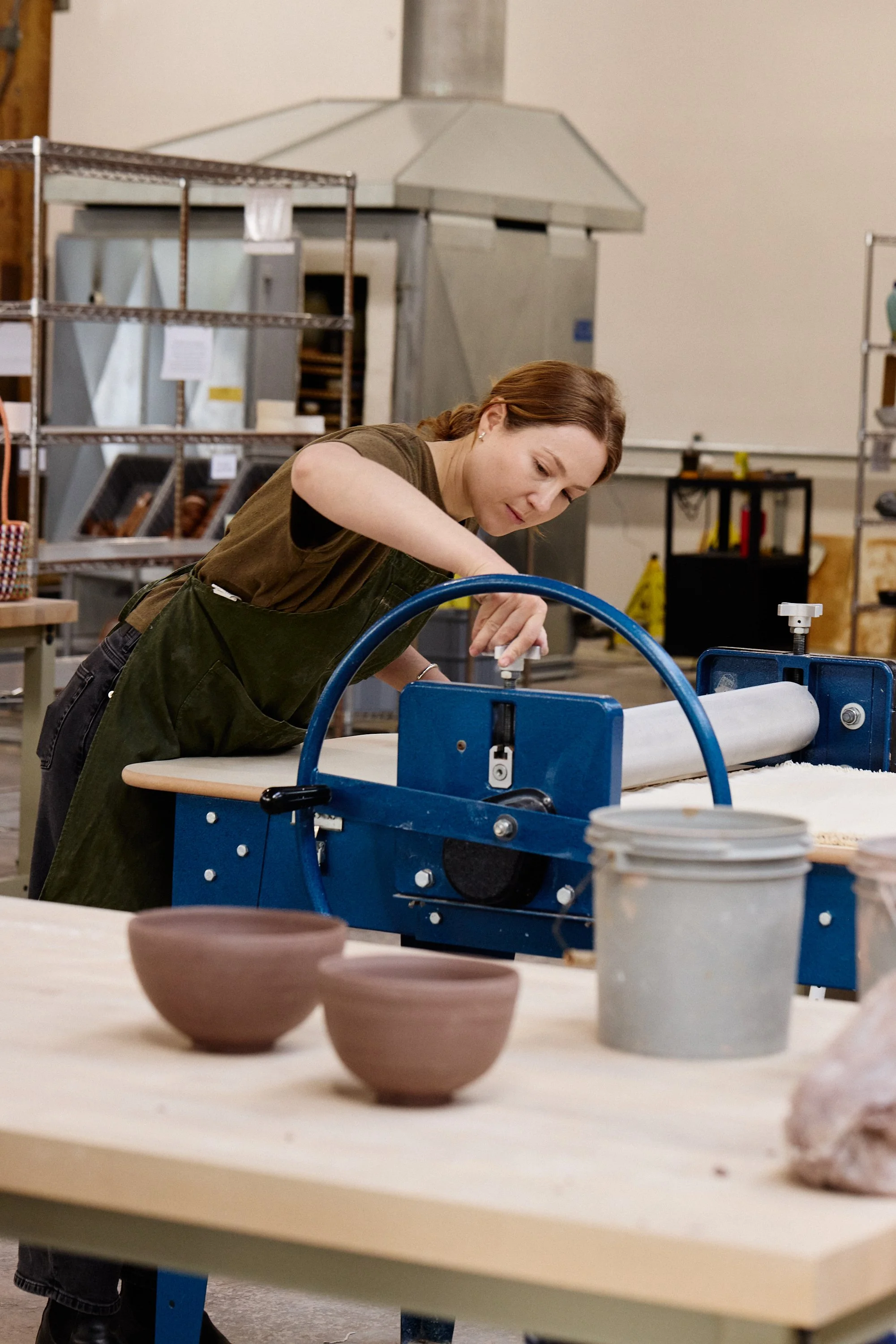
What does a typical day in your studio look like?I work full-time as an architect in a larger practice, so full days in my studio are rare but treasured. A studio day usually consists of focusing on two or three steps of the nerikomi process, rather than going from bagged clay to vessel in a single sitting the way you might on a wheel. This is mostly driven by the fact that nerikomi requires lots of time between each step to avoid cracking, delamination of layers, or warping: each block rests for around two weeks, each slab for around four weeks, and once a vessel is constructed, it dries for another month before firing.
So a typical day might begin with building new blocks for a few hours and then putting them to bed on my shelf to rest for a while. Then I might turn to the less glorious but essential work of sanding bone-dry pieces, outside in a P100 respirator, to make sure the nerikomi patterns will read clearly on the vessels before they go to bisque. Or I might spend the afternoon with slabs that have already been drying for three or four weeks and are ready to be cut and assembled into vessels of varying sizes.
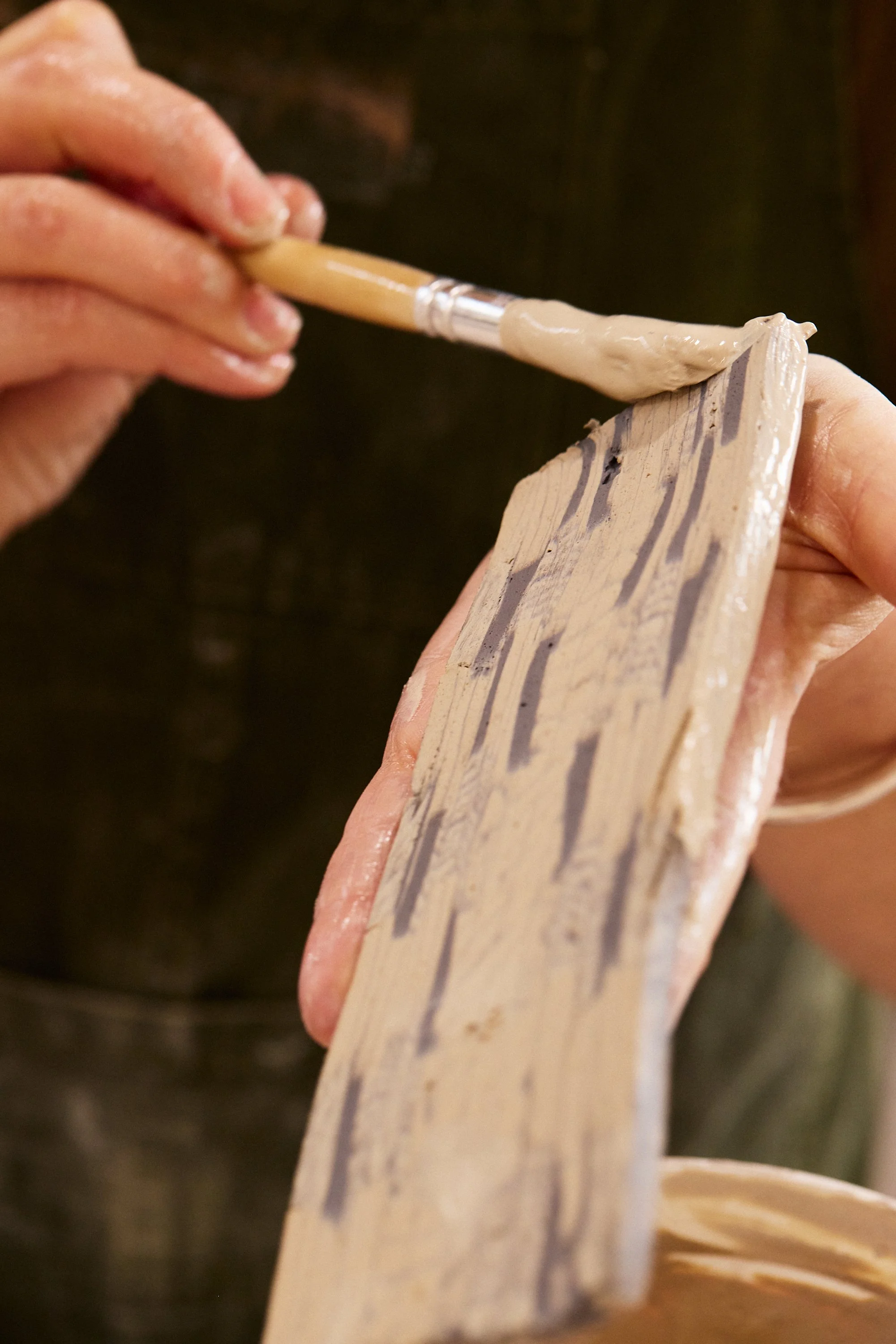
What part of the process feels most important to you?How I approach the creation of the patterns — a vague idea of an intended result that slowly clarifies as I go through the process of building the block, guided by intuition and allowing myself to be surprised, for better or for worse, by what the material does on its own. It’s a continuous process of building my intuition with this material through growing the body of work, and vice versa.
What is something people might not realize about how your work is made?All of my work — from the reds, to the greens, to the pieces that are unglazed on the exterior — uses only two glazes: either a transparent glaze on the interior, to support the vessel's functionality and ability to hold water, or MDShino, a common Shino glaze whose results vary widely depending on the location and thickness of application, how long it dries on the piece, where it sits in the kiln, and any number of other variables. Using Shino instead of other, colored glazes, is a deliberate choice, conceptually aligned with what my work is celebrating — the maker setting the conditions, and the material acting on its own. I work with the colors of the clay itself, or with colors that emerge through minerals interacting with the clay during firing: carbon trapped by the Shino glaze, and rosing drawn out by the reduction atmosphere in the kiln
What are you looking at, reading, or thinking about right now?Zoe Mohm's jewelry; Zumthor's newly opened David Geffen Galleries; the large 1:1 print of the Eames house on reflective mirror by artist unknown at LACMA; Ben Davies's coil-based nerikomi; Curtis Benzle's mishima; Kwak Kyungtae's onggi and buncheong; AZUR clothing's incredible range of naturally dyed silks; JB Blunk — his reverence for material and his merging of art, design, and craft; Julius Roberts's The Farm Table; Pádraig Ó Tuama's Poetry Unbound.
What place or environment most influences your work?My schooling as an architect and long-time work with Herzog & de Meuron both subliminally influence my work — through a striving for rigor of approach and concept, combined with an appreciation for material, craft, and beauty. So do my many visceral experiences in the outdoors: thick Pacific Northwest forests, the braided rocky rivers of Alaska, wide glaciated arctic valleys, and my daily walks in Glen Park.
What do you want people to feel when they live with your work?It's hard to describe, but a felt sense of beauty combined with gratitude and curiosity. One of the things I love about these vessels is their shifting nature depending on their context — flowers or no flowers, morning sun or warm setting sun, on the mantle or on the coffee table. They take on different qualities throughout the day and year, inviting us to contemplate and enjoy multiplicity, complexity, and transience.
What pieces are you showing in Grain + Clay?
How do they connect to your broader practice?
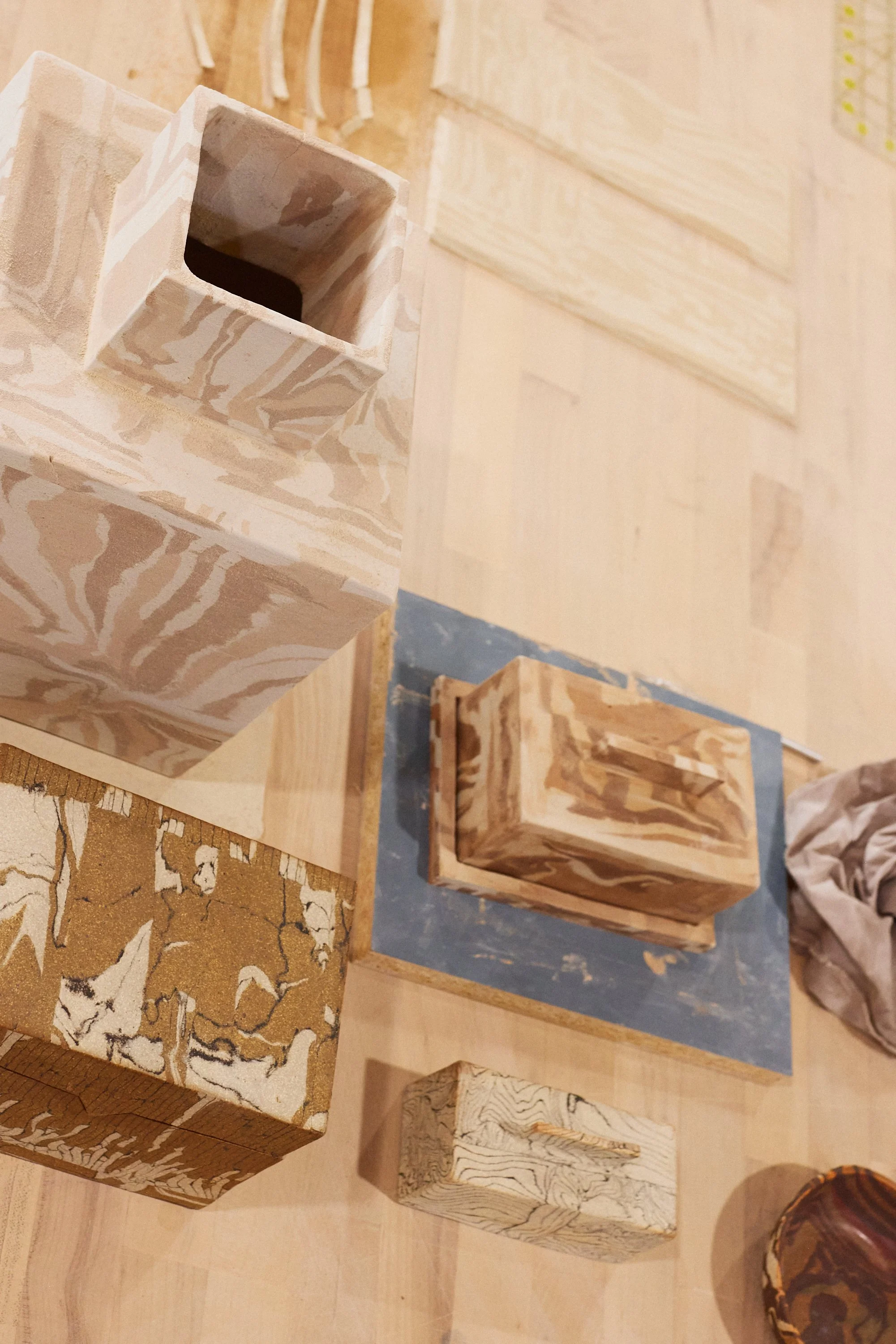
My works at Grain + Clay — eight vessels, three wall hangings, and three beaded chains — span three ongoing series.
The first experiments with three high-contrast clay bodies layered to create wider, more fluid patterns, then glazed with a single Shino in a variety of ways to produce a range of surface effects, from deep red pigmentation to green and golden hues.
The second works with one light-colored clay body and cobalt pigment slip to create fine-linework patterns. The blocks are either assembled into my usual rectangular vessels or sliced and woven together into wall-mounted ceramic tapestries. All works in this series are unglazed or use a transparent glaze on the interior to remain functional.
The third explores subtlety and low-contrast patterning, mixing porcelain with a light-colored clay body to create a soft, almost interwoven result. These pieces use a transparent glaze on the interior and, at times, emphasizing the subtle contrast between the clay bodies.
What are you interested in exploring next?I'm eager to explore the productive dialogue of layering surface decoration on top of the nerikomi slabs themselves, through either inlay (inspired by Cody Hoyt) or mishima (inspired by Curtis Benzle). I'm also interested in freeing the work from the constraints of rectangular form, beginning to work with nerikomi coils to create larger, rounder vessels and see what new patterns emerge from this process.
A texture you’re drawn to right now? A thin colored pigment wash on concrete
Light or shadow?Light
Something worn or something new?Something worn
Ongoing Artist Profiles
Grain + Clay is the current exhibition at The Strand Gallery in San Anselmo, curated by The Strand Design alongside Logan Link, bringing together artists whose practices explore material, process, and the dialogue between form and hand.
This feature with Carly Gertler is the first in an ongoing series of artist profiles and studio visits — conversations intended to document the people, spaces, and material practices that continue to inspire our work.
A selection of Carly’s pieces are currently available through The Strand Gallery and may be viewed by appointment at our San Anselmo studio alongside works from Grain + Clay through June.